Embrace China’s Timeless Opera Journey
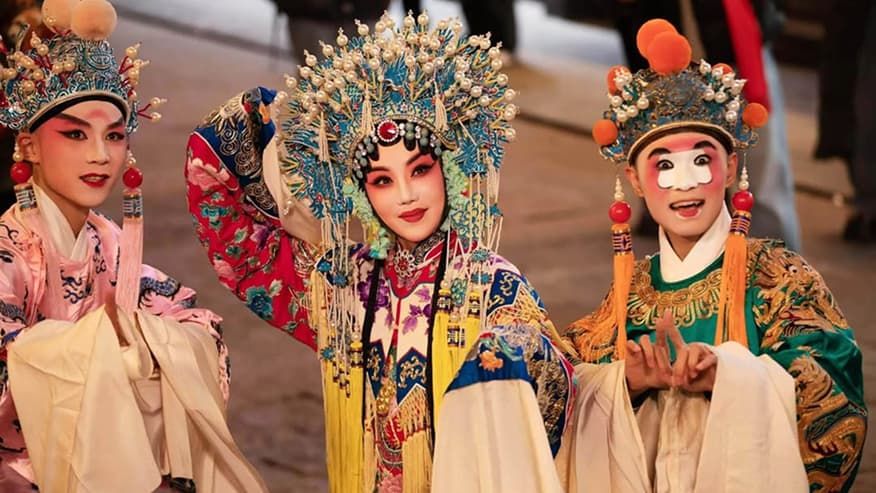
To gain insight into one of China’s greatest cultural treasures, which so harmoniously integrates music, dance, theatre, and history, Chinese opera provides an unforgettable initial introduction into China’s magnificent cultural past. Come on a journey of exploration of Chinese opera’s compelling past, mesmerizing allure, and vibrant forms—and learn where to see, up close, this ancient performing art.
Chinese opera, or “Xiqu,� as Chinese refer to it, has one of the oldest histories as theatre, dating back over one thousand years. Its history goes back as far as the third century AD and as far as ritual performances over 4,000 years ago. Its early incarnations were borrowed from sacrificial songs and dances performed in the magician-dancer sequences of the Xia dynasty period (around 2200 BC) and evolved over time into and through the dynasties, into a very highly developed art of storytelling, music, acrobatic movement, martial arts, costuming, and mask-like cosmetics.
Chinese opera has had major milestones in its history, such as the creation of the “Pear Garden� troupe in the Tang Dynasty, the creation of the professional role types in the Yuan Dynasty, and the emergence of Kunqu and Beijing Opera, which became hugely popular in the Qing Dynasty. Beijing Opera (or Peking Opera) remains China’s national theatre, which brings together singing performance, body acting, advanced facial makeup, and live playing of instruments in a combination that brings into existence an otherworldly stage reality which enthralls audiences across the globe.
Chinese opera’s vibrant variability is part of its allure. There are in excess of 300 styles which continue in China’s regional and ethnic life, of which each possesses music, its own local dialect, as well as performing protocols and costumes. There are the five most commonly known styles of opera such as the Beijing Opera, Yue (Cantonese) Opera, Huangmei Opera, the Pingju Opera, and the Yu Opera along with numerous other variations in the region such as the Sichuan Opera, the Kunqu Orchestra, and the Qinqiang Orchestra. The face-change illusion, for instance, characterizes Sichuan Opera, but Yue Opera excels in melodic lyricism and female casts.
Character types in Chinese opera are highly stylized to facilitate the function of performing emotion and narration through such character types as Sheng (male), Dan (female), Jing (painted face characters which portray personalities or moral attributes), and Chou (comic types). The combination of the standard Chinese instruments, which range from jinghu fiddle and erhu to percussion and wind, provides the mood of theatre and narration through stylistic melodic and rhythmic movements.
Multiple cities and locations offer splendid opportunities to get deep into the Chinese opera culture to those who are willing to have a closer experience of it. Beijing is the hometown and birthplace of Beijing Opera with the best places to watch it like Liyuan Theater, Changan Grand Theater and Mei Lanfang Theater. At Liyuan, you may not only admire the performances of operative music at the world level but even have a chance to glimpse behind the scenes to watch the actors putting on their sophisticated make-up- which is quite rare and amazing indeed.
Elsewhere in China, Cantonese Opera features in Guangdong and Hong Kong in theaters such as Xiqu Centre and Yau Ma Tei Theatre, and Sichuan Opera has its headquarters in Chengdu where there would be performance of face-changing acrobatic routine. Yue Opera is revivified in Eastern China, i.e., in Shanghai and Zhejiang, where lyricism and subtlety define performance. Henan and northern China offer backdrops for operas of Yu and Pingju, which flourish in local color and native myth.
The appreciation of the Chinese opera lends the possibility of experiencing the centuries old cultural essence of China, to which the audiences can relate the ancient tales of heroism, romance and morality embodied in the striking language of music, gesture, color and story. Be it the amazing painted faces and acrobatics of Beijing Opera, the touching melodies of Yue Opera, or the wholesale magical makeovers of Sichuan Opera, this form of art can do more than provide entertainment--it is a moving cultural experience.
In case you are visiting China, then you should not miss an opera show. In addition to the performance itself is the atmosphere it places you in a world in which history, art, and emotion come together on stage in that distinctly Chinese art form. Be ready to be captivated by the eternal wonder of Chinese opera, which is an immortal treasure of cultural heritage of China is about to be unraveled.
This cultural journey through Chinese opera is not just about the exaltation of its tradition, but provides its explorer with an entertaining perspective that leads deeper into the local cultures of China to anyone who ventures out of the typical tourist trail.